
How to Play Heroes of Might and Magic III Remake
The three-layer loop Ubisoft is rebuilding in Snowdrop, explained without assuming you remember 1999.
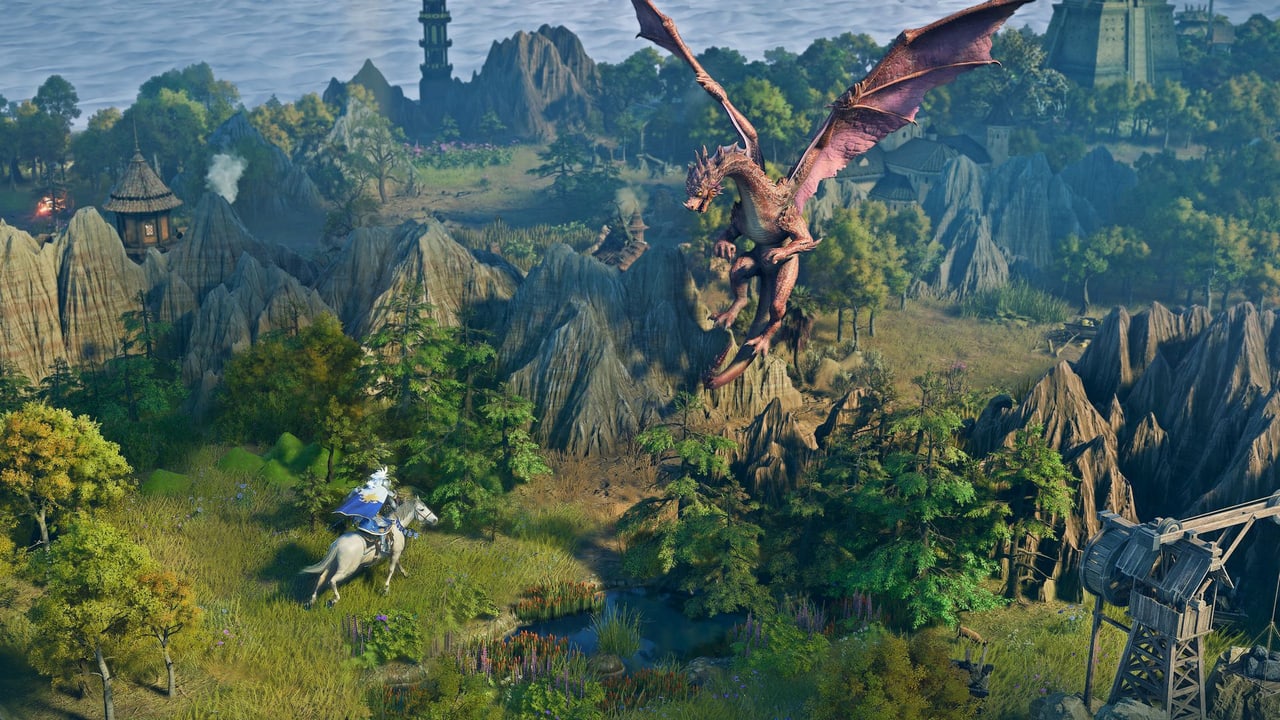
Heroes of Might and Magic III Remake is a turn-based strategy game that mixes a kingdom map, a city builder, an RPG hero, and a tactical battle. Ubisoft’s gameplay overview is the cleanest official look at those layers working together. This page translates that footage into a rules explanation you can use on any map, including the new prologue.
The adventure map is the real game
Each of your heroes has movement points. Terrain, paths, roads, and skills such as Pathfinding and Logistics change how far you walk. You spend a day flagging mines, visiting power-ups, picking up resources, and positioning for tomorrow. Fog of war hides enemy heroes. A day ends when every hero you control has moved or you hit End Turn. A week is seven days; Monday is when dwellings produce creatures. If you do not collect those creatures, they stockpile in the town, not in your army, until a hero visits.
Ubisoft’s gameplay overview also shows hero orders so a secondary commander can gather resources, follow the main hero, or ferry recruits without you clicking every tile. Treat that as preview QoL on top of the mule, not a replacement for hiring the second hero.
This is why a second hero is not optional. One champion fights. One mule ferries troops and visits the leftover map objects. High-level play adds a third and fourth hero as scouts. The remake does not remove that economy; it only makes the map easier to read in 3D, with seasons, weather, and a zoomed-out strategic view that some previews compared to an overhead icon mode.
Towns: one building a day, forever
A town constructs a single building per day, paid in gold and the matching resources. Hall upgrades raise income. Dwellings unlock creature tiers. Mage Guilds add spells. Faction-unique buildings change the identity of the town: the Portal of Glory, the Skyship, the Escape Tunnel, the Necromancy Amplifier. The remake keeps that one-building-per-day constraint and adds a build queue so you stop forgetting to click. It also makes recruiting several dwellings in one visit less tedious. Those are quality-of-life tools. They do not let you build two Mage Guilds in a day.
Capturing a second town is usually stronger than maxing a single street of dwellings, because each town is another income stream and another weekly growth pool. Garrisons need leftover stacks. Empty towns get stolen. The combat guide covers sieges; the town lesson here is simpler: never leave a captured Fort without a plan for the next Hall and the next dwelling.
Heroes as RPG characters
When a hero levels, you pick a primary stat (Attack, Defense, Spell Power, Knowledge) and a secondary skill. Classes bias those rolls. Knights roll Attack and Defense. Wizards roll Power and Knowledge. Secondary skills such as Wisdom, Earth Magic, Logistics, Air Magic, and Estates decide whether a hero is a fighter, a spell carrier, or a gold printer. The remake has not announced a rewritten skill wheel. Treat the original skill list as the working document and use the hero tier list when you want a ranking rather than a tutorial.
Artifacts sit in slots and can make a mediocre hero unfair. The artifact guide is the catalogue. On this page you only need the habit: detour for a Treasure Chest or a minor artifact hut if the fight is cheap. Do not detour into a stack that kills your week-two army.
Battles: speed, range, and not getting greedy
Combat is turn-based on hexes. Fast units act first. Ranged units shoot until an enemy stands next to them. Melee units want to close without eating two shots on the approach. Spells such as Slow, Haste, Blind, and Resurrection swing fights more than a single upgrade of creature tier. The remake’s Alt overlay shows walk and shot range for you and for the enemy, which is the one new habit you should build even if you ignore every other quality-of-life feature.
Sieges add walls, a gate, a moat, and arrow towers. Bring a ballista, a spell to damage walls, or flying units. The 3D presentation makes collapsing barricades look dramatic; the rule is still “do not walk into the moat for no reason.”
Winning a map without a walkthrough
Most maps end when you capture every enemy town and defeat every enemy hero, or when a scenario script fires. The path is almost always: secure economy, grow a core stack, find the enemy, force a decisive battle when your week-three army outgrows theirs. Diplomacy, if you take the skill, can convert wandering stacks instead of fighting them. That is a Rampart and sometimes a Castle plan, not a universal law.
If you are lost after this page, return to the beginner guide for the first-week checklist, or jump to multiplayer if your actual goal is a lobby rather than a campaign. The official overview below is long on atmosphere and short on numbers; the numbers still come from the original design Ubisoft has said it will not reinvent.
Frequently Asked Questions
Quick answers for new commanders and returning veterans.
Is the remake real-time?
No. Exploration, towns, and battles stay turn-based. Simultaneous turns are a multiplayer option so eight people are not waiting in a strict chain all evening.
How long is a game?
A small map can finish in an evening. Campaigns and large random maps last many hours. The original's pacing is the point of the remake.
Do I need to know every spell?
No. Learn Slow, Haste, Cure, and a damage spell first. Wisdom and a Mage Guild of level three already change maps. The rest can wait.