
Creatures and Armies in Heroes of Might and Magic III Remake
Seven tiers per town, Monday growth, and a 3D model that must not talk you into attacking a horde.
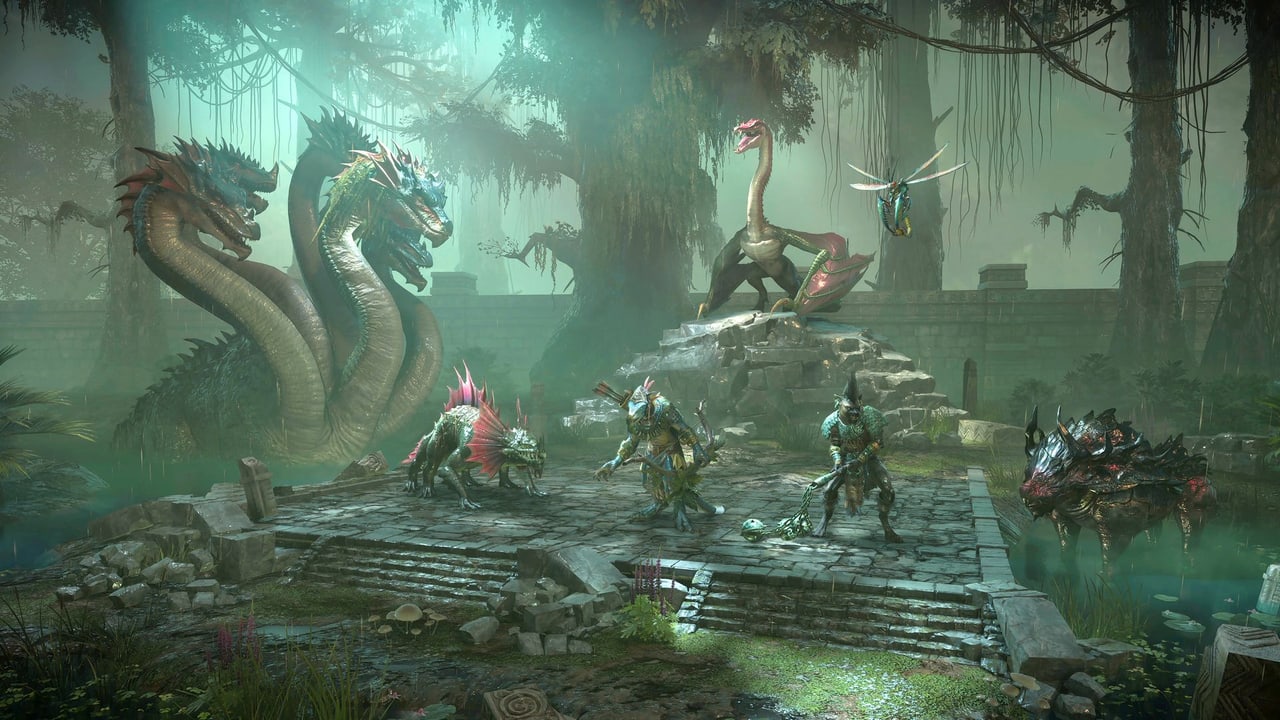
Every fight in Heroes of Might and Magic III Remake is still a clash of stacks, not of individual soldiers. A stack has a creature type, a count, a speed, and a range. The remake rebuilds the models in Snowdrop and lets the camera orbit a siege, but preview coverage — IGN, Dualshockers, RPG Site, ItalianSpartacus — says the underlying army math is the original. This page is the roster document: how stacks work, what week-one growth means, and which towns the gamescom demos actually put on screen. Power rankings belong on the creature tier list. Identity belongs on the faction overview.
Stacks, sizes, and the lying 3D camera
On the adventure map, a wandering stack is labelled with a size word, not a census. Original English used bands such as few, several, pack, lots, horde, throng, swarm, zounds. Those bands are ranges. A “few” black dragons are still a wipe for a week-one army. A “horde” of peasants is a gold pinata.
The remake’s 3D presentation makes this easier to get wrong. Preview players warned that a pack of dragons can look lonely when the camera is close. Believe the text, not the model. The combat guide is how you decline a fight; this page is why the label existed in the first place.
In battle, one stack occupies one hex. Speed decides turn order and how far the stack walks. Shooters want a clean line. Flyers ignore ground. Two-hex walkers (most cavalry and some dragons) need space. Morale can grant an extra action; luck can spike damage. The remake adds audio cues around those procs, per Ubisoft. It does not change what a +1 luck roll means.
Seven tiers and the Monday clock
Each of the nine towns has a seven-tier dwelling tree, usually with an upgrade building that turns the base unit into a stricter version: more damage, sometimes a shot or a flying flag. You do not unlock tier 7 on day one. You climb Fort → Citadel → Castle and the matching dwellings, one structure per day, as the town building guide lays out.
Monday is when dwellings produce. Growth numbers are still the original table until Ubisoft publishes a new one: low-tier units in the dozens, high-tier units in the single digits, plus unique-building bonuses such as extra griffins from a Griffin Bastion. If your hero is not in town, the units accumulate in the courtyard. They do not walk to the front by themselves. Mass recruiting, confirmed in previews, buys the courtyard in one click. It does not increase growth.
Upgrades are a gold and resource sink that pay for themselves when the stack is your main damage. Upgrading peasants you will never bring is how Castle players go broke. Upgrading the griffin stack you actually march is how Castle players win week three.
What the demos showed
Gamescom sessions did not walk all nine towns. The long public gameplay walkthrough spent time on Castle (griffins, the Bastion, the classic human line), Inferno (the demon roster under a red sky), Tower (mages and the fast-expand plan IGN also tried), and Necropolis (the undead engine). Fortress swamp creatures and Conflux elemental plazas appear in official screenshots, which this wiki already uses on faction pages. Treat missing towns as “not shown,” not “cut.” Ubisoft’s announcement listed all nine, Conflux included, as day-one content with both expansions.
Necromancy is not a dwelling. It is a skill that turns killed enemies into skeletons after combat, which is why Necropolis plays like a snowball and why the hero page cares who starts with it. Inferno’s Pit Lords converting corpses into demons is a building-and-stack interaction, not a spell. Both survive in preview reports because they are the original identity, not a remake invention.
Neutral stacks and map value
Adventure-map creatures sit on mines, artifacts, and gates. Some join for a price or for Diplomacy. Some never join. The remake’s strategic zoom, described in the controls guide, is there so you can see which icon is a dragon nest before you spend a hero’s whole week walking at it. IGN’s hands-on even had a Griffin pack punish a greedy Tower expand — the same lesson the 1999 maps taught with less geometry.
Do not collect every friendly dwelling on the way to a goal. A hydra pond is a commitment. A wolf den is a speed bump. The creature tier list tells you which neutrals are actually scary; this page tells you they are all just stacks with a label.
How to read an army in 2027
Look at speed first (who acts, who kites). Look at shots next (who needs a wall of walkers). Look at weekly growth last (whether you can replace what you lose). Then look at the hero Attack and Defense, because those numbers modify every stack in the list. A stack of angels behind a 0 Attack hero is not the same weapon as the same stack behind Catherine. The remake will make the angels prettier. It will not add their missing Attack for you.
When a 2027 patch publishes new growth or new abilities, this roster will grow a table. Until then, practise the original units on the 1999 client and use the remake previews only for the camera warning: the model is marketing, the size word is the game.
Frequently Asked Questions
Quick answers for new commanders and returning veterans.
Are creature stats changing in the remake?
No preview described a new table. Treat original growth, speed, and abilities as current until a 2027 balance blog.
Why does a small dragon stack still wipe me?
Size words are ranges, and dragons are high-tier. The 3D camera can make a pack look like one model. Read the label.
Where is the power ranking?
On the creature tier list. This page explains stacks; that page argues S through C.